
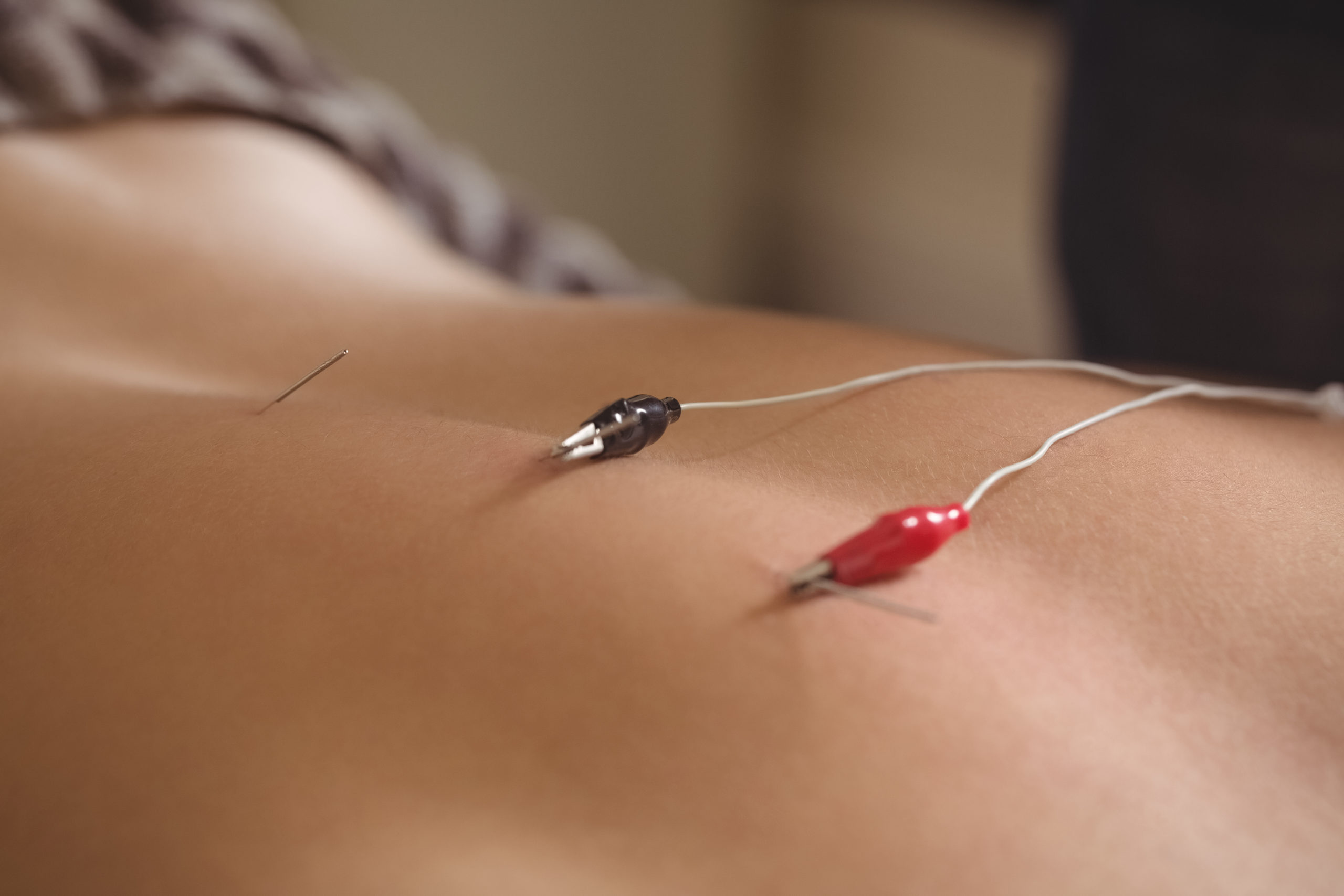
How one practitioner’s search for the “why” behind every needle changed her clinical reasoning, her patient outcomes, and the range of cases she’s able to take on.
For years, curiosity was the thing that drove Dr. Kim Windschauer’s practice. Traditional acupuncture had given her a strong foundation and consistently good results, but she kept running into the same question: what was actually happening underneath the needle? When a standard point prescription didn’t work as well as she wanted, she had no systematic way to adjust it. She could add more points and hope for a different result, but she couldn’t yet explain why one approach might succeed where another failed.
That question is what led her to Neuropuncture.
A Language She Could Actually Use
What stood out immediately about Dr. Michael Corradino’s training wasn’t a new technique. It was a new vocabulary. Instead of relying only on energetic concepts, Dr. Corradino talked about identifiable anatomical structures: peripheral nerves, nerve roots, spinal segments, motor points, autonomic pathways, regions of the brain. These were structures Dr. Windschauer could study in an anatomy textbook, investigate in the scientific literature, and discuss with other healthcare providers in a shared medical language.
“With Neuropuncture, an acupuncture point was no longer simply a point along a meridian. I could ask what anatomical structures existed beneath that location, what neural circuitry I was accessing, and what physiological response stimulation of that circuitry might produce.”
She’s careful to note that this didn’t mean abandoning acupuncture’s history. It meant finally having a modern, researchable framework for understanding it.
The Needle Is the Beginning, Not the End
Dr. Windschauer’s biggest realization in training was that the acupuncture point itself was only an access point, the beginning of a neurological conversation, not the treatment’s endpoint. Once she understood what she was actually accessing, she could trace the circuitry: where a nerve originates, where the signal travels, what happens when it reaches the spinal cord or brain, and what physiological function that pathway influences.
That shift changed how she treats every patient who doesn’t respond to a standard protocol. Instead of searching for another point prescription, she goes back to the anatomy and physiology and asks what she could do differently. It even changed how she understood the traditional principle of treating the root and not just the branches, a concept she once understood only in energetic terms. Now she can investigate what’s actually happening physiologically beneath a diagnosis, and ask which systems are relevant to the specific patient in front of her.
A Patient Who Got Her Life Back
The case Dr. Windschauer says she’ll never forget involved a woman who came to her after back surgery, having lost voluntary control of her bladder. She was self-catheterizing multiple times a day, experiencing numbness and tingling down both legs, and had become afraid to leave her home.
Bladder function depends on coordinated communication across pelvic nerves, sacral spinal cord circuitry, sympathetic and parasympathetic pathways, the muscles controlling the urethral sphincter, and the brain centers that coordinate urination. Rather than asking which acupuncture points treat the bladder, Dr. Windschauer used Neuropuncture’s framework to ask which of those neurological systems had been disrupted by the surgery, and how she might influence that circuitry directly.
Over the course of treatment, the numbness and tingling resolved. Her bladder function improved to the point that she no longer needed to self-catheterize. She regained the independence to leave her home without planning her life around it.
At her final visit, she brought Dr. Windschauer her unused catheters, tied together with a ribbon like a small bouquet.
“Neuropuncture has dramatically expanded both my clinical toolbox and the way I approach patient outcomes.”
What Changed in Her Practice
That kind of case is exactly what Dr. Windschauer says Neuropuncture made possible. Complex patients who don’t fit neatly into a single diagnosis, and who’ve often already tried other approaches, no longer stop at the edge of what she was taught. She can break a case down by asking what isn’t functioning correctly, what circuitry contributes to that dysfunction, and where she can influence it.
It’s the difference, she says, between memorizing another list of point prescriptions and developing a system of clinical reasoning that keeps evolving with her.
Her advice to any acupuncturist considering the training is a single question, the same one that drove her into it in the first place:
“With Neuropuncture, I was no longer dependent on a specific protocol for every condition that walked through my door.”
Dr. Kim Windschauer is a licensed acupuncturist and Neuropuncture-certified practitioner.